
Industrial-Grade Items in Support of Safety in Nuclear Installations
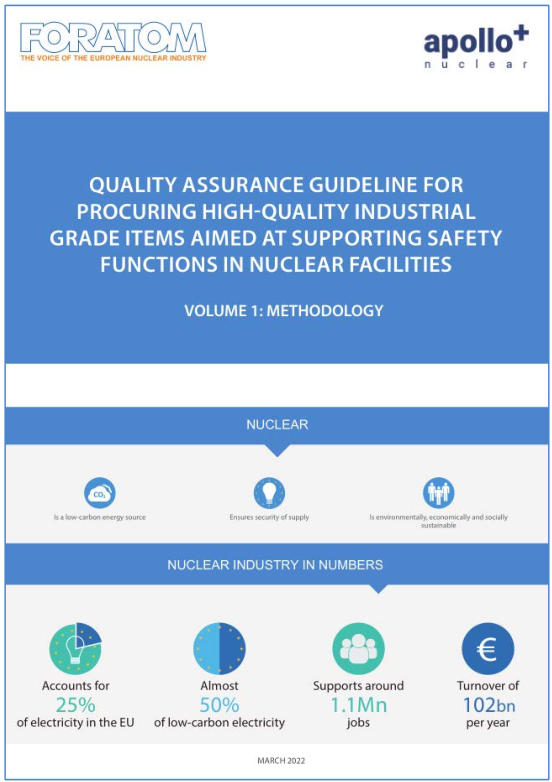
In June 2020, the FORATOM Supply Chain Optimisation Working Group published a report on optimizing the European nuclear supply chain. Following this, Nucleareurope and the European Nuclear Installations Safety Standards Initiative (ENISS) collaborated on a European Guideline addressing high-quality industrial-grade items in nuclear facilities, compatible with commercial-grade dedication (CGD) methodology. This industry-led initiative received backing from ten European national nuclear associations, licensees, and vendors.
Quality Assurance Guideline for Procuring High-Quality Industrial-Grade Items
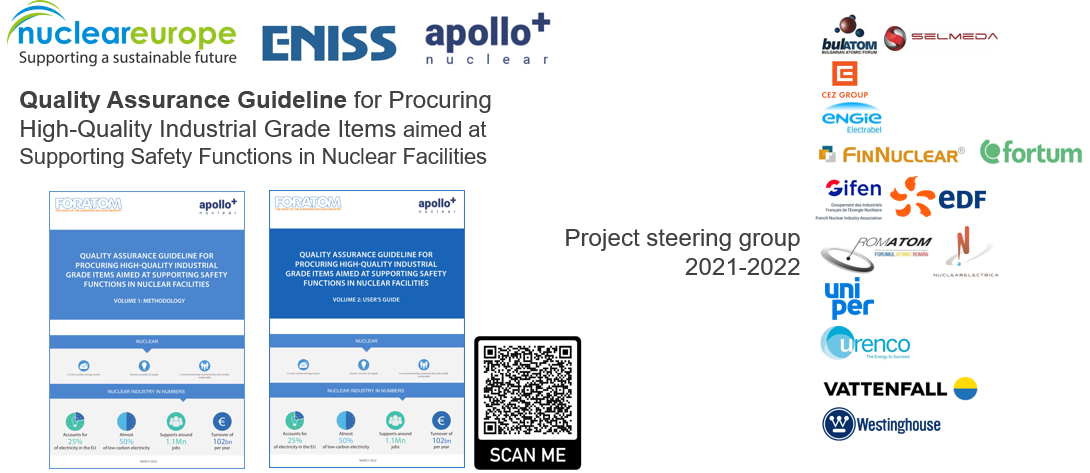
The guideline documents a methodology, called dedication, for ensuring that items manufactured under non-nuclear-specific quality assurance arrangements are of commensurate quality. The documents are available through Nucleareurope, with separate volumes addressing different aspects of the procurement methodology.
Background on Quality Standards
Nuclear regulatory bodies across Europe maintain requirements ensuring that procured items and services are of a high quality. Many industries leverage established regulations, codes, and standards. International standards like ISO and regional standards such as EN are recognized across Europe for nuclear applications after proper assessment.
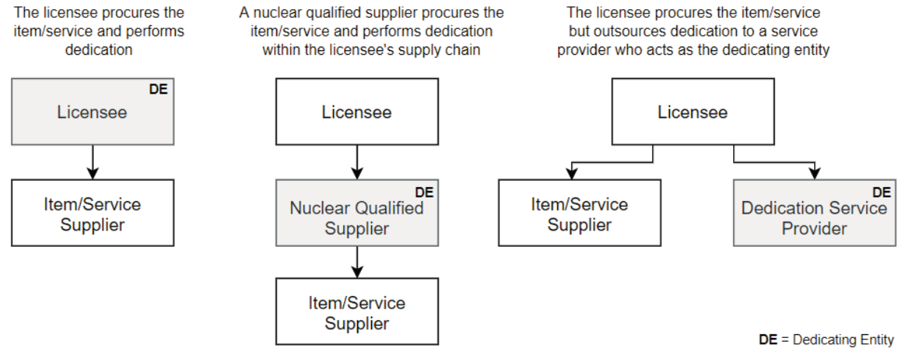
The dedication methodology enables items manufactured without nuclear-specific quality controls to achieve equivalent quality standards. This approach transfers responsibility to the dedicating entity—typically a licensee—to verify critical characteristics directly linked to safety functions using well-defined quality assurance and control techniques.
What is Commercial-Grade Dedication?
Dedication represents a quality assurance methodology related to the procurement of items and services important to safety which were not controlled under the licensee’s nuclear-specific supplier quality expectations. This acceptance process focuses on confidence that items fulfil safety functions post-installation. Importantly, dedication is not intended to establish the suitability of the design.
The concept emerged over four decades ago in the United States and has become standard practice among approximately one-third of global nuclear power plant licensees.
Why Establish Dedication Processes?
Licensees pursue dedication to create procurement pathways ensuring equivalent quality while accessing broader supplier networks. Benefits include:
- Accessing high-reliability industry supply chains beyond traditional nuclear-grade suppliers
- Accepting off-the-shelf items, including unused inventory from decommissioned facilities
- Participating in growing European networks sharing lessons learned, experience, and the ever-growing range of dedication case studies
European Guideline Innovation
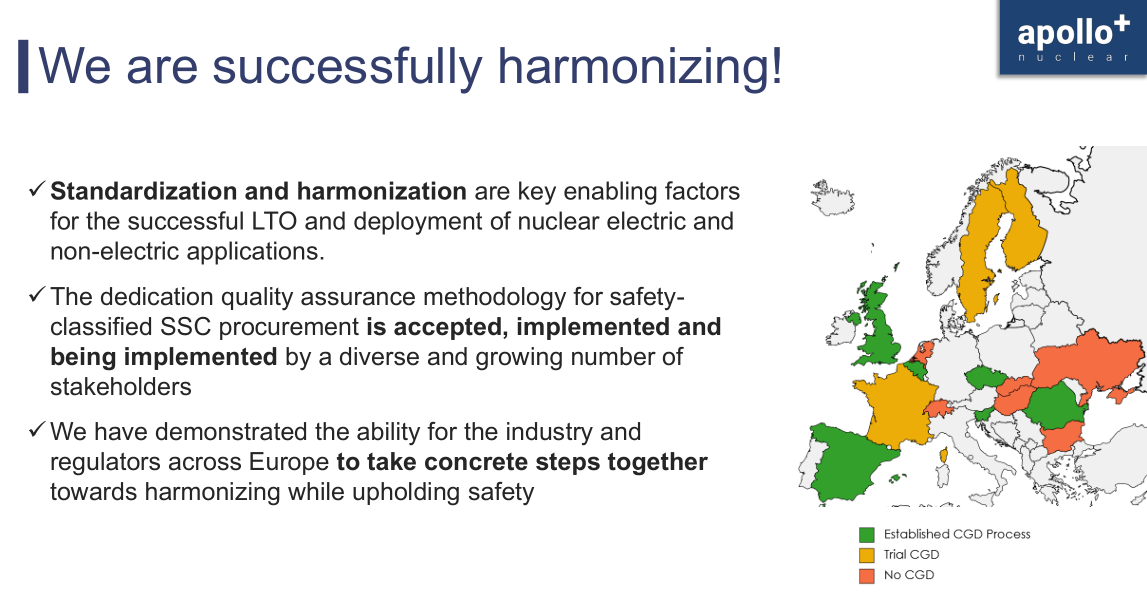
This represents the first generalized dedication methodology applicable across the European continent and which is not tied to one country’s laws, regulations, codes or standards. Key benefits include:
- Continent-wide methodology — independent of specific national jurisdictions
- Robust acceptance process — replacing inconsistent approaches across countries
- Regulatory stability — providing a common basis for oversight and compliance
- Graded, risk-informed approach — improving both safety and the economics of the process
Unlike country-specific approaches, this guideline provides a dedication methodology which can be applied across the European continent and which is not tied to one country’s laws, regulations, codes or standards.
Connection to ISO 19443:2018
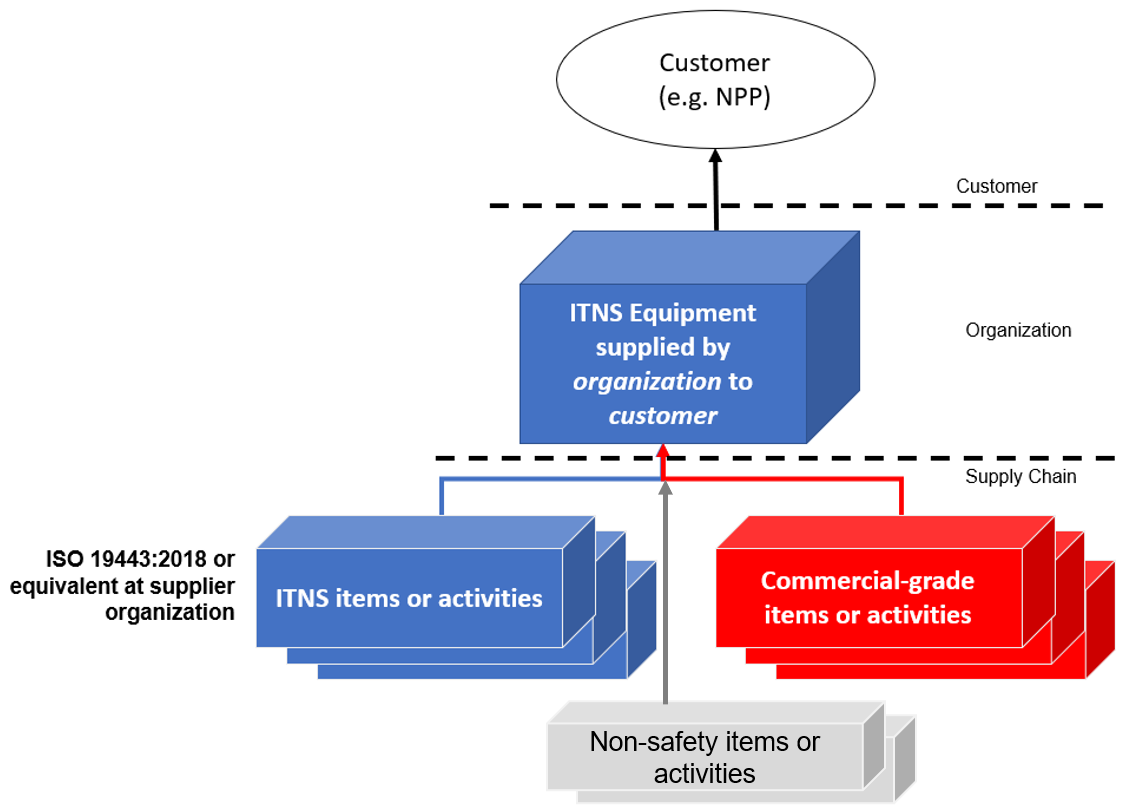
ISO 19443:2018 specifies quality management requirements for nuclear energy sector suppliers. The standard includes dedication methodology as a control mechanism for externally provided items. Organizations following this standard are expected to consider critical characteristics of commercial-grade items when determining verification activities.
ISO/TR 4450:2020 provides implementation guidance, and this European Guideline supplements both documents with detailed instruction on critical characteristic selection, verification, and service dedication.
Key Definitions
The guideline provides comprehensive definitions essential for practitioners working with CGD methodology:
Acceptance Activities: Actions verifying item critical characteristics per dedication plans.
Critical Characteristics: Design characteristic subsets typically chosen by the dedicating entity, the verification of which establishes confidence that a procured item will perform its intended safety function(s).
Dedicating Entity: Organizations performing dedication, typically nuclear facility licensees.
Dedication: A planned series of actions undertaken to establish confidence that a procured item or service will perform its intended safety function(s).
Dedicated Item: A high-quality industrial-grade item which has successfully been dedicated—meaning its critical characteristics have been verified as meeting acceptance criteria.
High-Quality Industrial-Grade Item: Items designed and manufactured (or services specified and executed) under quality assurance or quality control arrangements other than those typically required by the licensee.
Safety Function: A specific purpose that must be accomplished for safety for a facility or activity.
Quality Assurance: Planned and systematic actions necessary to provide confidence that quality requirements will be fulfilled.
Performance-Based Supplier Assessment: An assessment method evaluating whether existing supplier controls sufficiently verify critical characteristics.
Looking Ahead
The publication of this European Guideline marks a significant milestone for the nuclear industry’s supply chain practices. By providing a harmonized, risk-informed approach to commercial-grade dedication, it enables licensees and suppliers across Europe to work within a common framework—reducing costs, improving safety, and strengthening the nuclear supply chain at a critical time for the industry’s future.
Apollo Plus authored the FORATOM European Guideline on Commercial-Grade Dedication and now supports the European nuclear industry with all aspects of its implementation and use. Learn more about our CGD services.